Ruiyi Fang

方瑞懿

PhD Student in Computer Science
Western University, Canada

rfang32@uwo.ca

London, Ontario, Canada

Ruiyi Fang

About Me

I am a PhD student in the Department of Computer Science at Western University (University of Western Ontario), Canada, co-advised by Prof. Charles Ling (Fellow, Canadian Academy of Engineering) and Prof. Boyu Wang. My research focuses on domain adaptation and AI for chemistry, particularly in developing novel methods for graph neural networks and their applications.

Previously, I completed my Bachelor's degree in Software Engineering (Elite Program) at the University of Electronic Science and Technology of China (UESTC), where I worked with Prof. Zhao Kang on graph representation learning and contrastive learning.

Research Interests

Graph Neural Networks AI for Chemistry Transfer Learning

News

Sep 2026
New Five of our papers are accepted at NeurIPS 2026: “From Small to Large: Cross-Scale Graph Domain Adaptation via Local-Global Structural Alignment”, “Spectral Energy Allocation Enables Source-Free Domain Adaptation in Time Series Forecasting” (Oral), “Disentangling Homophilic and Heterophilic Patterns for Multi-Domain Graph Foundation Models”, “Beyond Feature Disruption: Boundary-Diverting Unlearnable Examples against Linear Probing”, and “Unsupervised Unlearnable Segmentation via Semantic Structure Disruption”.
June 2026
The IEEE Computational Intelligence Society (CIS) Chapter under the IEEE London Section is officially established, and I serve as its Founding Chair. [Approval Letter]
May 2026
Four of our papers are accepted at ICML 2026: “FUSE: Full-spectrum Unlearnable Examples via Spectral Equalization”, “Scaling-Aware Adapter for Structure-Grounded LLM Reasoning”, “Attention with Routed-Memory for Learnable Sparse Control”, and “Structure-Centric Graph Foundation Model via Geometric Bases”.
Apr 2026
Our paper “Transfer Learning with Graph Neural Networks to Predict Polymer Solubility Parameters” is accepted at npj Computational Materials.
Jan 2026
Three of our papers are accepted at ICLR 2026: “SAGA: Structural Aggregation Guided Alignment with Dynamic View and Neighborhood Order Selection for Multiview Graph Domain Adaptation”, “When Priors Backfire: On the Vulnerability of Unlearnable Examples to Pretraining”, and “Entropy-Guided Dynamic Tokens for Graph-LLM Alignment in Molecular Understanding”.
Dec 2025
I was invited to give a talk, “Unveiling Intrinsic Graph Data Properties for Domain Adaptation”, at OnDBD — Ontario DataBase Day.
Nov 2025
Our two papers, “Intra-Class Unbiased Prototype Aggregation and Classifier Collaboration for Personalized Federated Learning”, and “Graph Domain Adaptation via Homophily-Agnostic Reconstructing Structure” (Oral), are accepted at AAAI 2026.
May 2025
Our paper “Homophily Enhanced Graph Domain Adaptation” is accepted at ICML 2025.
Jan 2025
Our paper “On the Benefits of Attribute-Driven Graph Domain Adaptation” is accepted at ICLR 2025.
Dec 2024
Our paper “Leveraging Group Classification with Descending Soft Labeling for Deep Imbalanced Regression” is accepted at AAAI 2025.

Selected Publications

First-author / co-first-author papers are listed below (* equal contribution). Click a figure to enlarge it. For a complete list including collaborative works, please see my Google Scholar profile.

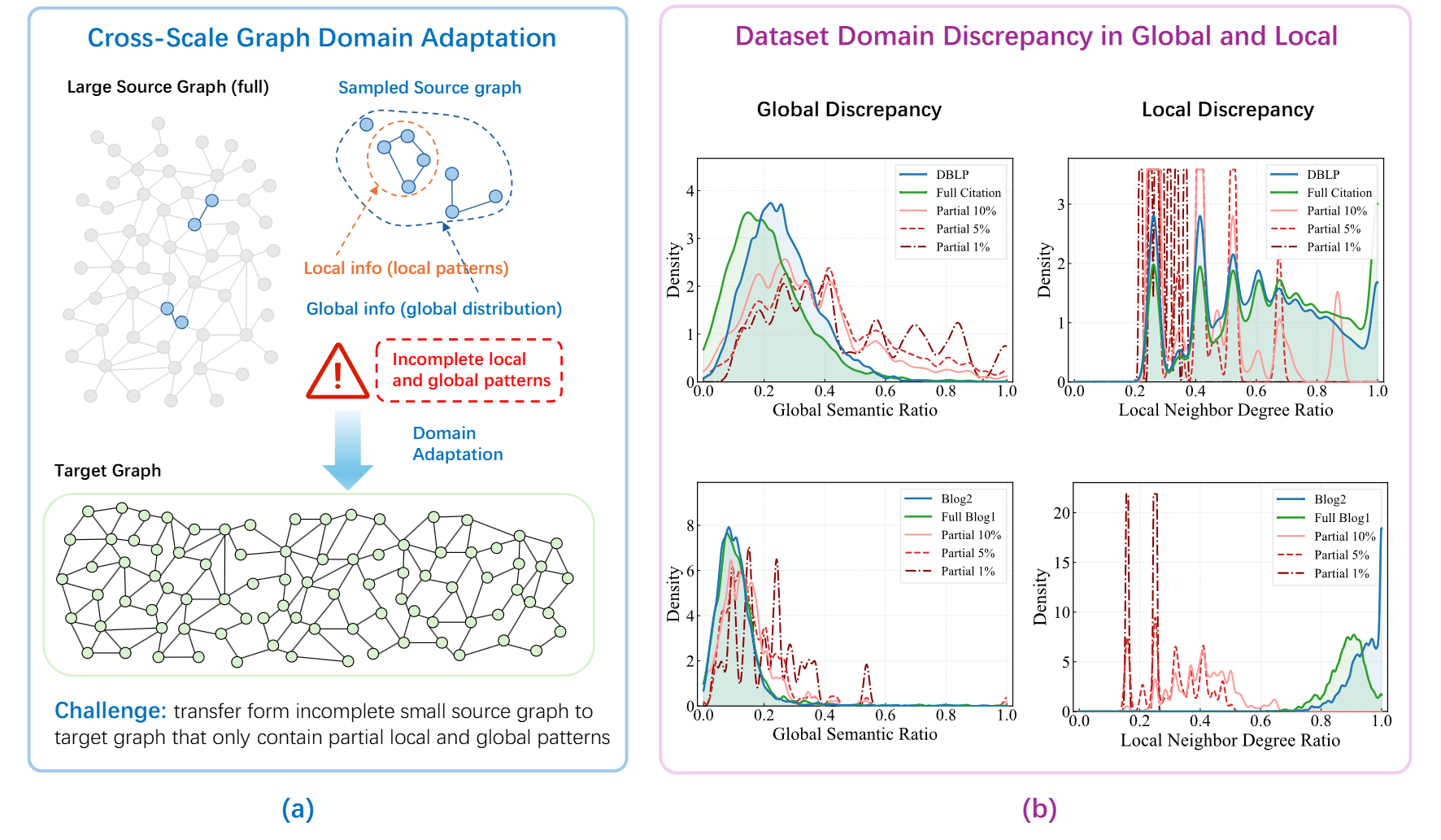
Overview of LGSA
NeurIPS 2026

From Small to Large: Cross-Scale Graph Domain Adaptation via Local-Global Structural Alignment

Ruiyi Fang, Gezheng Xu, Qiuhao Zeng, Zihao Jing, Jiale Cai, Zhihao Li, Hao Zheng, Xuanting Xie, Shuo Wang, Bingheng Li, Ruizhi Pu, Zhao Kang, Charles Ling, Boyu Wang

TL;DR Studies cross-scale graph domain adaptation, transferring from a small labeled source graph to a much larger unlabeled target graph. LGSA aligns local neighborhood structure with a GCN branch and scale-robust global structure with a descriptor-based MLP branch, fusing the two by prediction entropy.
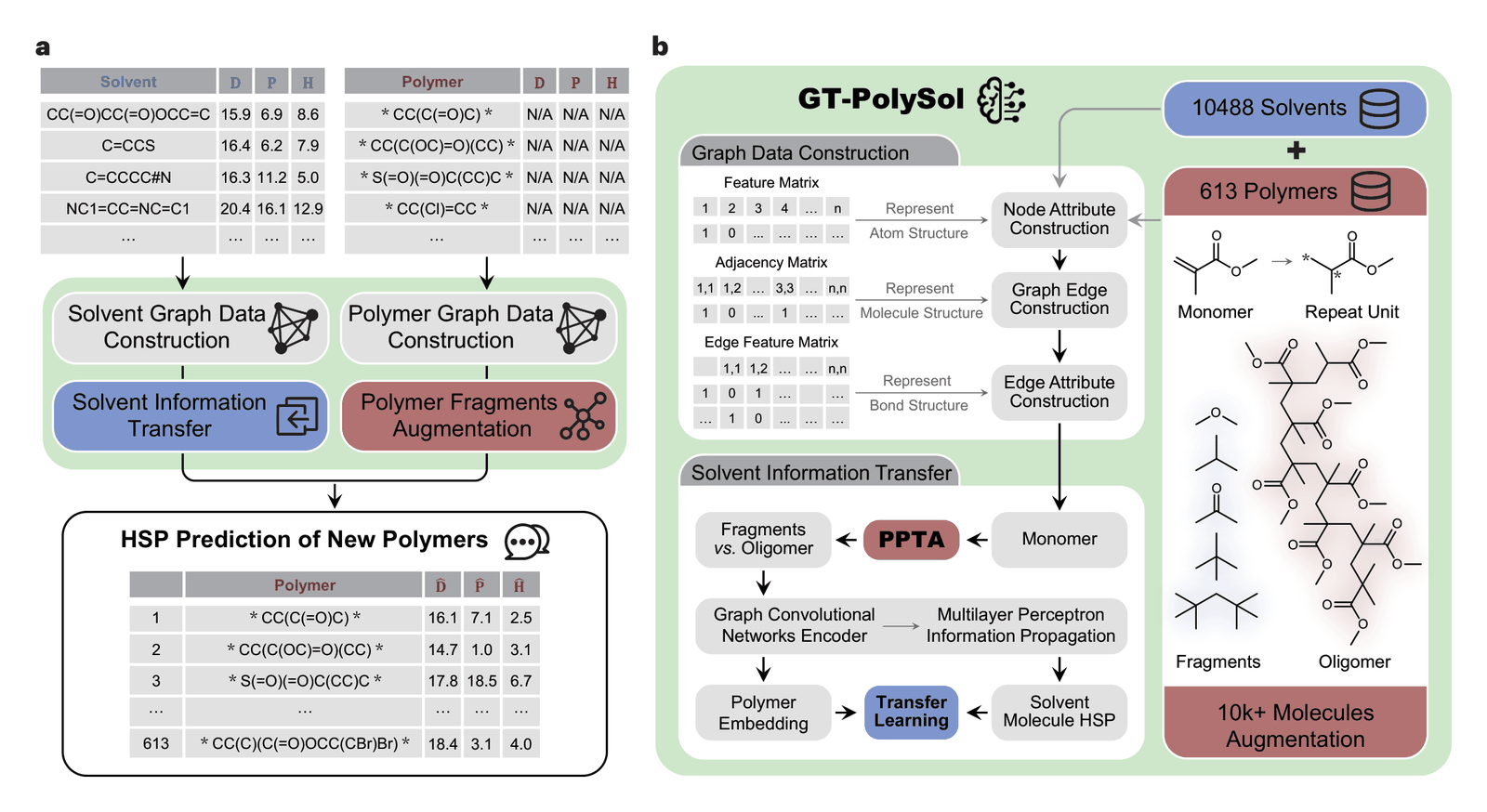
Overview of GT-PolySol
npj Comput. Mater. 2026 Nature Partner Journal

Transfer Learning with Graph Neural Networks to Predict Polymer Solubility Parameters

Ruiyi Fang, Changhong Chen, Qiang Wang, Charles Ling, Boyu Wang, Hong Zhang

TL;DR Polymer Hansen solubility parameter labels are scarce, so GT-PolySol transfers knowledge from 10k+ labeled solvent molecules through a graph neural network, while its PPTA algorithm enriches polymer representations with generated oligomers and fragments.

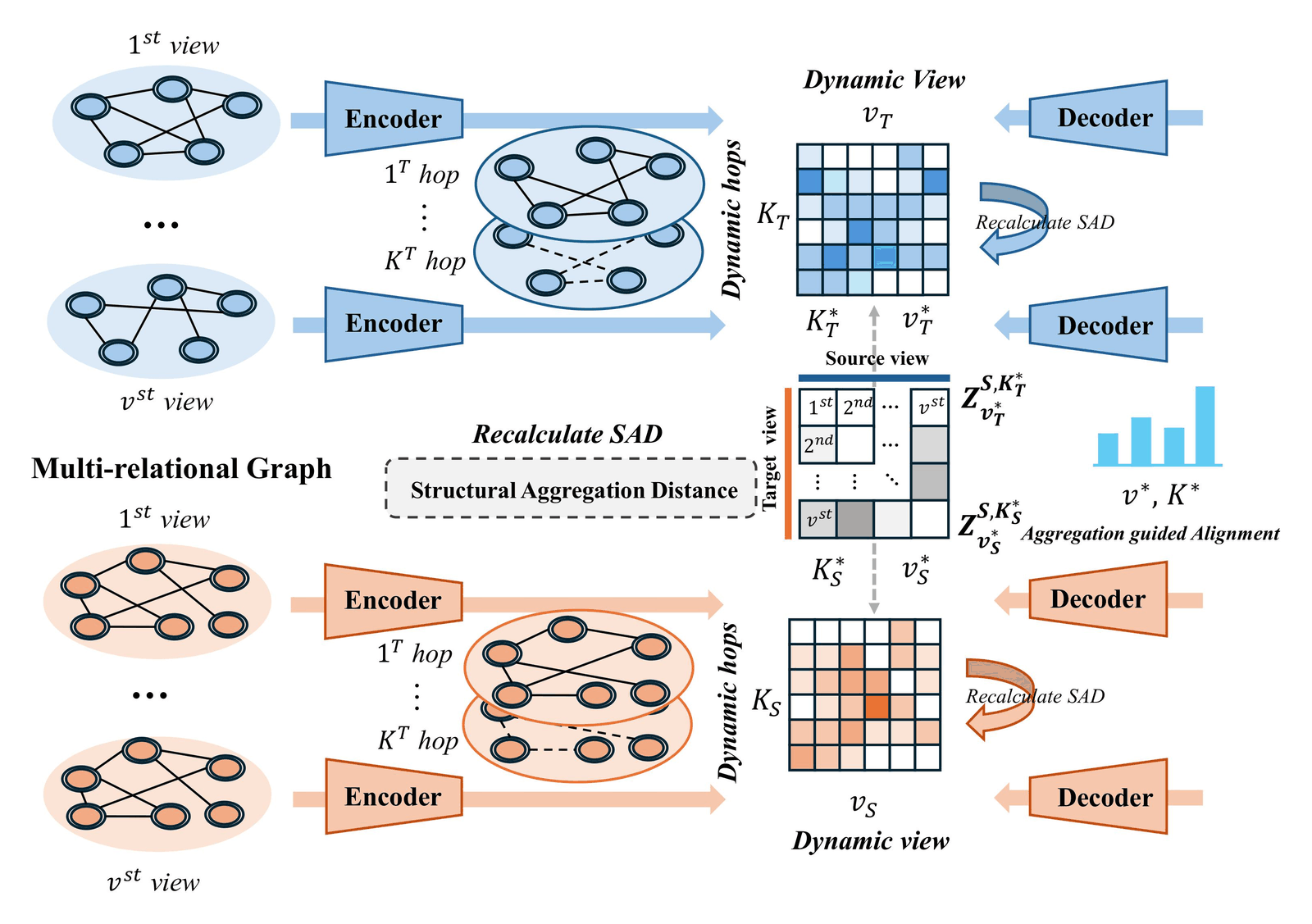
Overview of SAGA
ICLR 2026

SAGA: Structural Aggregation Guided Alignment with Dynamic View and Neighborhood Order Selection for Multiview Graph Domain Adaptation

Ruiyi Fang, Jingyu Zhao, Shuo Wang, Ruizhi Pu, Bingheng Li, Jiale Cai, Zhihao Li, Zihao Jing, Jian Zhu, Song Tang, Charles Ling, Boyu Wang

TL;DR Extends graph domain adaptation to multi-view graphs. A Structural Aggregation Distance scores every view and neighborhood-order pair, and alignment follows the dominant pair as it shifts during training.

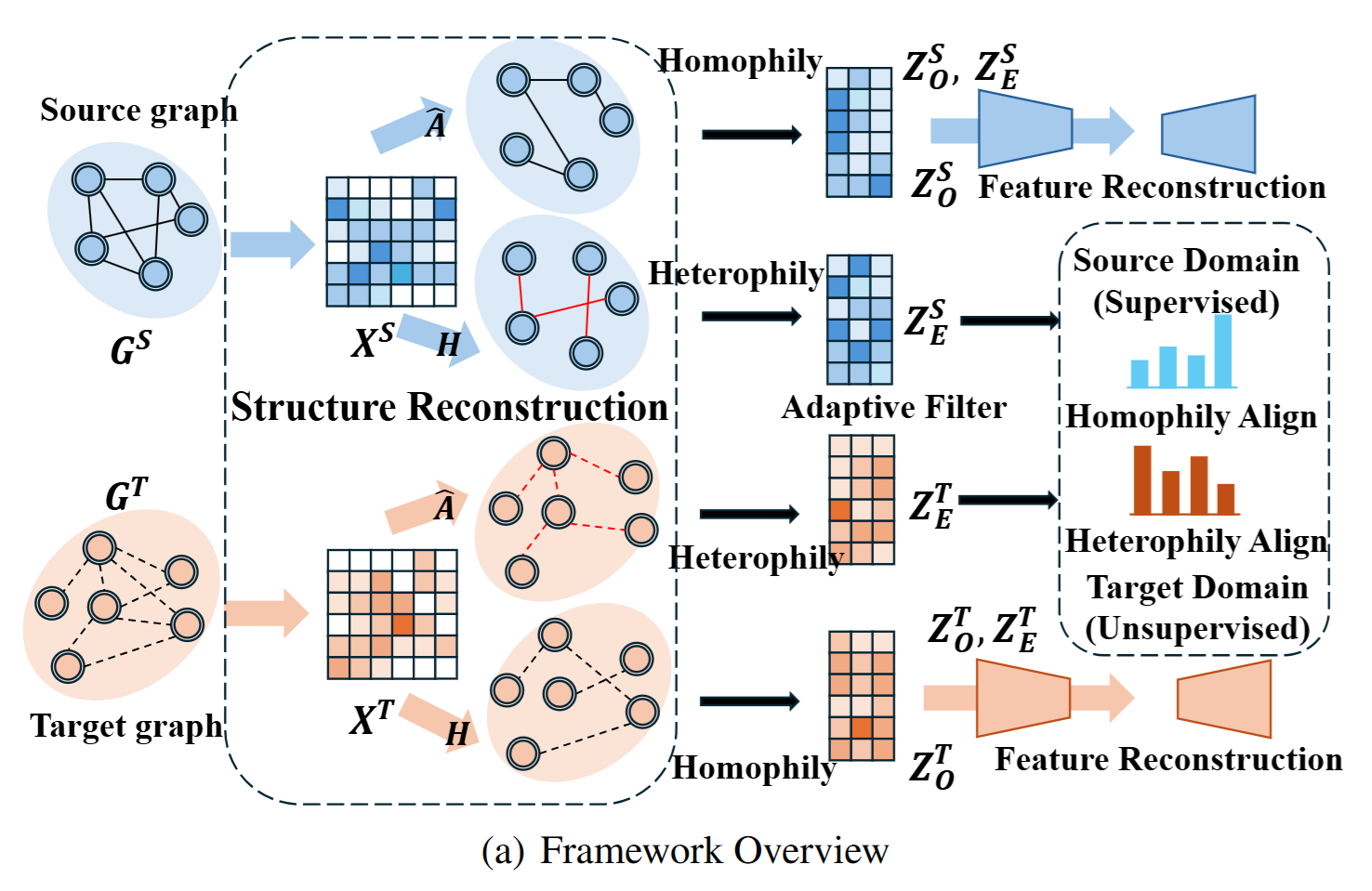
Overview of RSGDA
AAAI 2026 Oral

Graph Domain Adaptation via Homophily-Agnostic Reconstructing Structure

Ruiyi Fang, Shuo Wang, Ruizhi Pu, Qiuhao Zeng, Hao Zheng, Ziyan Wang, Jiale Cai, Zhimin Mei, Song Tang, Charles Ling, Boyu Wang

TL;DR A homophily-agnostic approach for targets whose homophily level is unknown: it reconstructs homophilic and heterophilic variants of both graphs and aligns each pair separately, with the largest gains on heterophilic graphs.

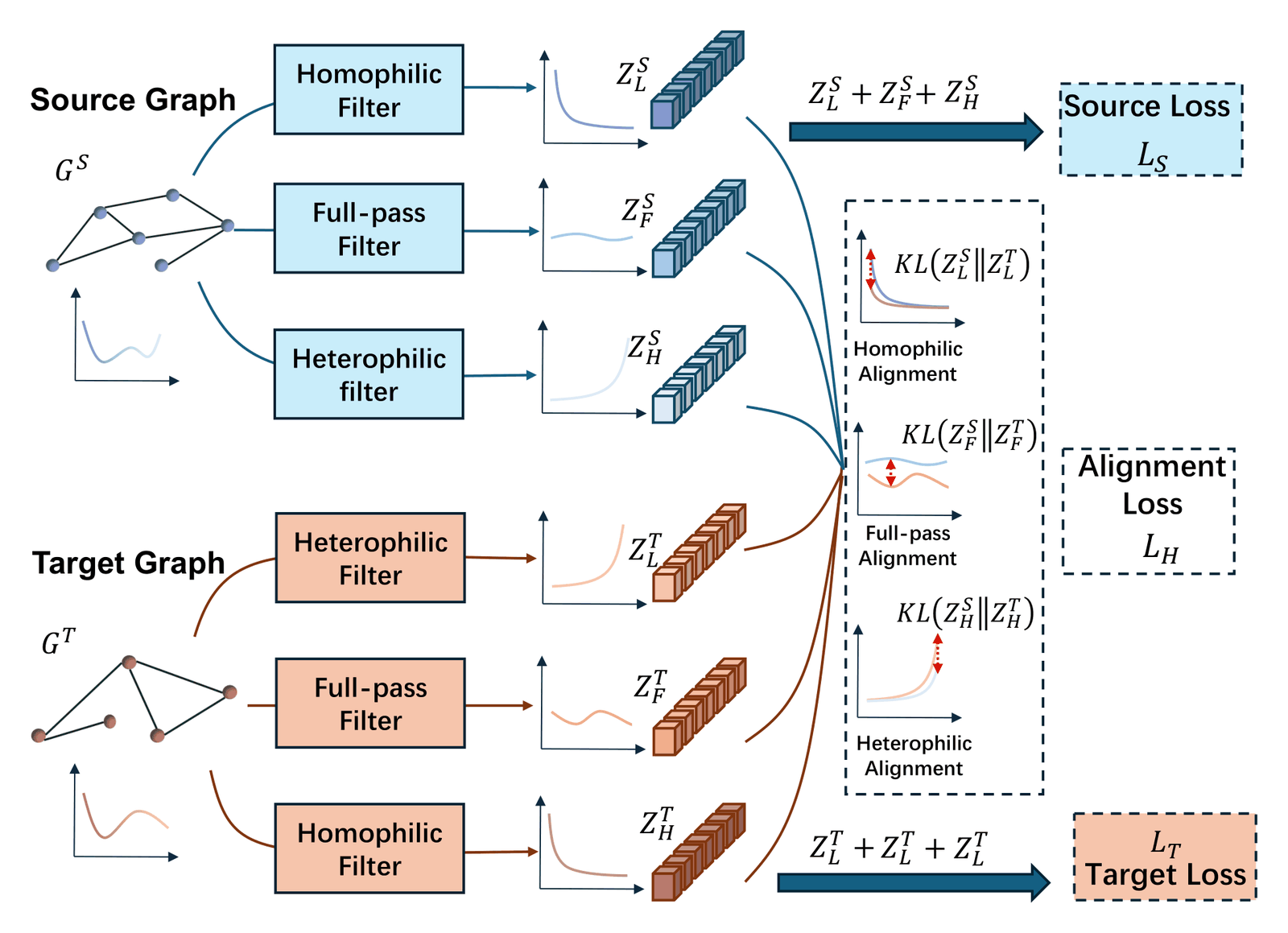
Overview of HGDA
ICML 2025

Homophily Enhanced Graph Domain Adaptation

Ruiyi Fang*, Bingheng Li*, Jingyu Zhao, Ruizhi Pu, Qiuhao Zeng, Gezheng Xu, Charles Ling, Boyu Wang

TL;DR Shows empirically and theoretically that homophily discrepancy between source and target graphs degrades adaptation, and aligns homophilic, full-pass, and heterophilic filtered signals across domains to close the gap.

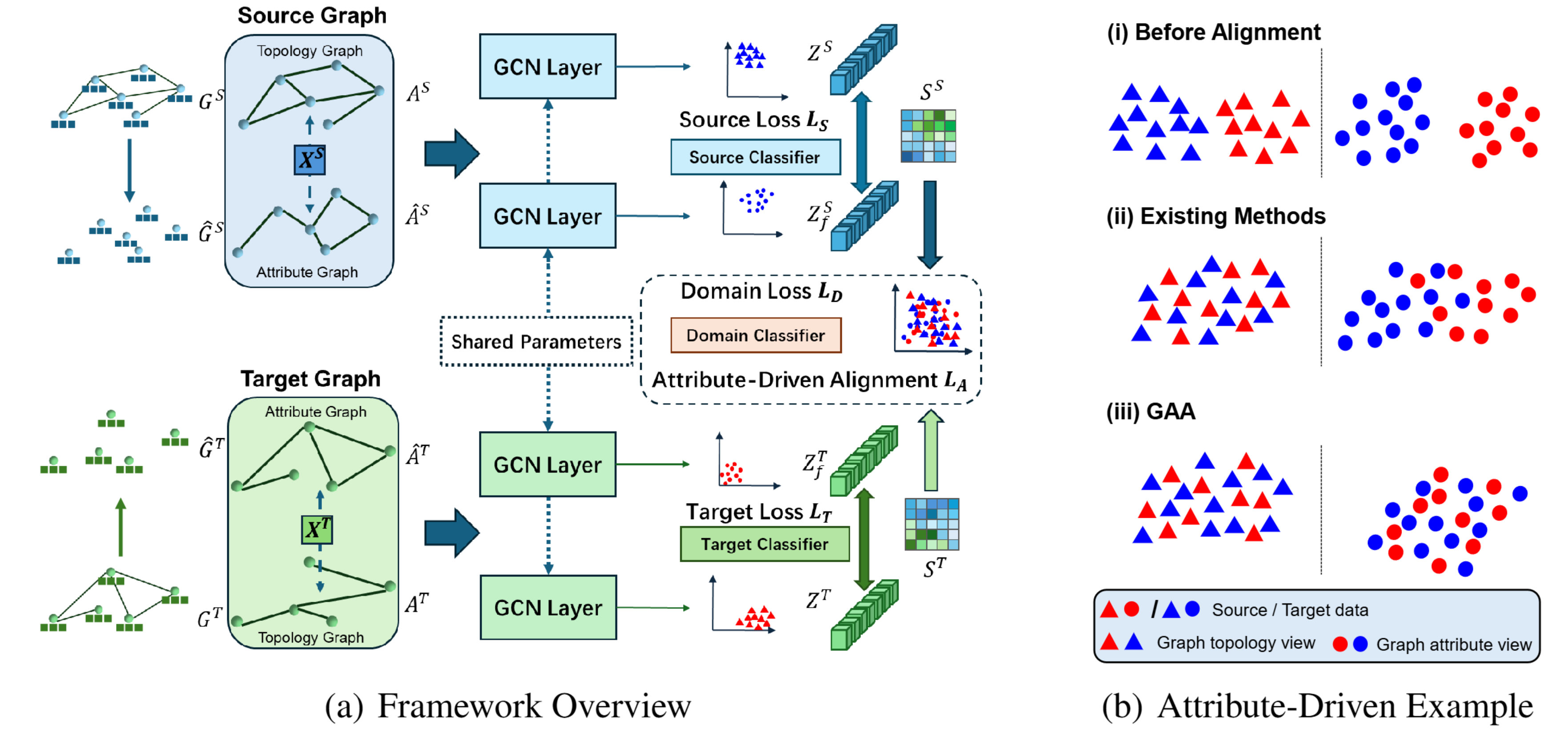
Overview of GAA
ICLR 2025

On the Benefits of Attribute-Driven Graph Domain Adaptation

Ruiyi Fang*, Bingheng Li*, Zhao Kang, Qiuhao Zeng, Nima Hosseini Dashtbayaz, Ruizhi Pu, Boyu Wang, Charles Ling

TL;DR Proves that node-attribute discrepancy, alongside structural shift, plays a critical role in graph domain adaptation, finds attribute shift larger than topology shift on benchmarks, and aligns both views with a cross-channel module.

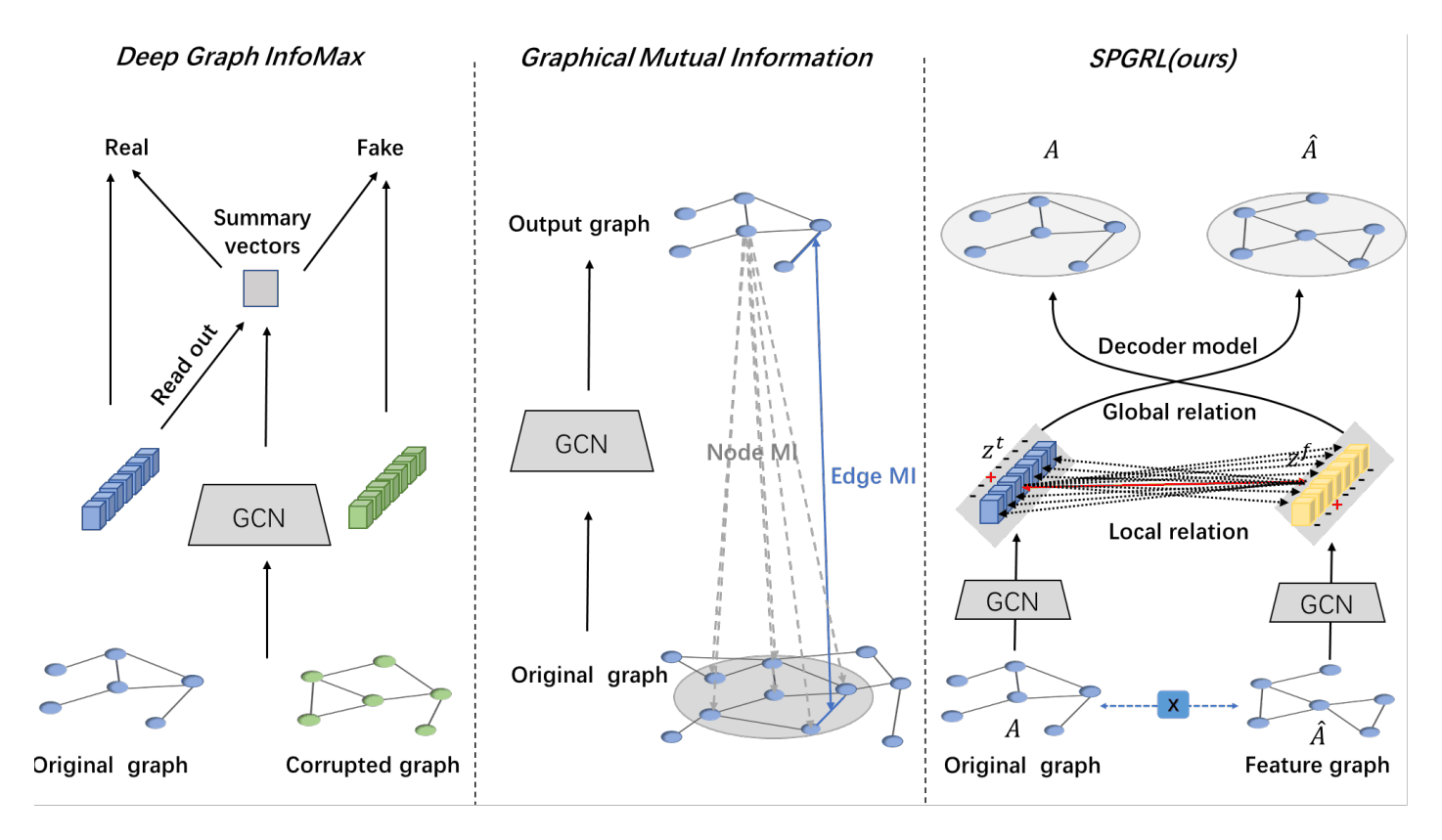
Overview of SPGRL
ICDM 2022 IEEE International Conference on Data Mining

Structure-Preserving Graph Representation Learning

Ruiyi Fang*, Liangjian Wen*, Zhao Kang, Jianzhuang Liu

TL;DR Builds a kNN feature graph as a complementary view, contrasts it with the input graph at node level, and maximizes mutual information between graph and feature embeddings to retain global structure.

Honors & Awards

Nick Cercone Graduate Scholarship in Computer Science

IEEE Canadian Foundation

2026

Vector Scholarship in AI

Vector Institute, Canada

2023 - 2024

University Outstanding Graduate

UESTC

2019 - 2023

Professional Service

Founding Chair

IEEE Computational Intelligence Society (CIS) Chapter, Western University · IEEE London Section

Conference Reviewer

NeurIPS 2024, 2025, 2026 ICML 2024, 2025, 2026 ICLR 2024, 2025, 2026 SIGKDD 2025, 2026 AAAI 2026 IJCAI 2026 AISTATS 2025, 2026 WSDM 2026 ECML-PKDD 2026 ACM Multimedia 2024, 2025

Journal Reviewer

IEEE Transactions on Neural Networks and Learning Systems Transactions on Machine Learning Research Neural Networks Pattern Recognition Information Sciences Neurocomputing

Volunteer

SIGKDD 2025, Toronto, Canada

Visitors

Visitor Map Coming Soon

To activate, sign up at MapMyVisitors, then paste the widget code in index.html.

Contact

rfang32@uwo.ca

Department of Computer Science
Western University
London, Ontario, Canada

Google Scholar